Crop & Field Application
Aerial application over grain, oilseed and forage acres where ground equipment is not the practical way in.
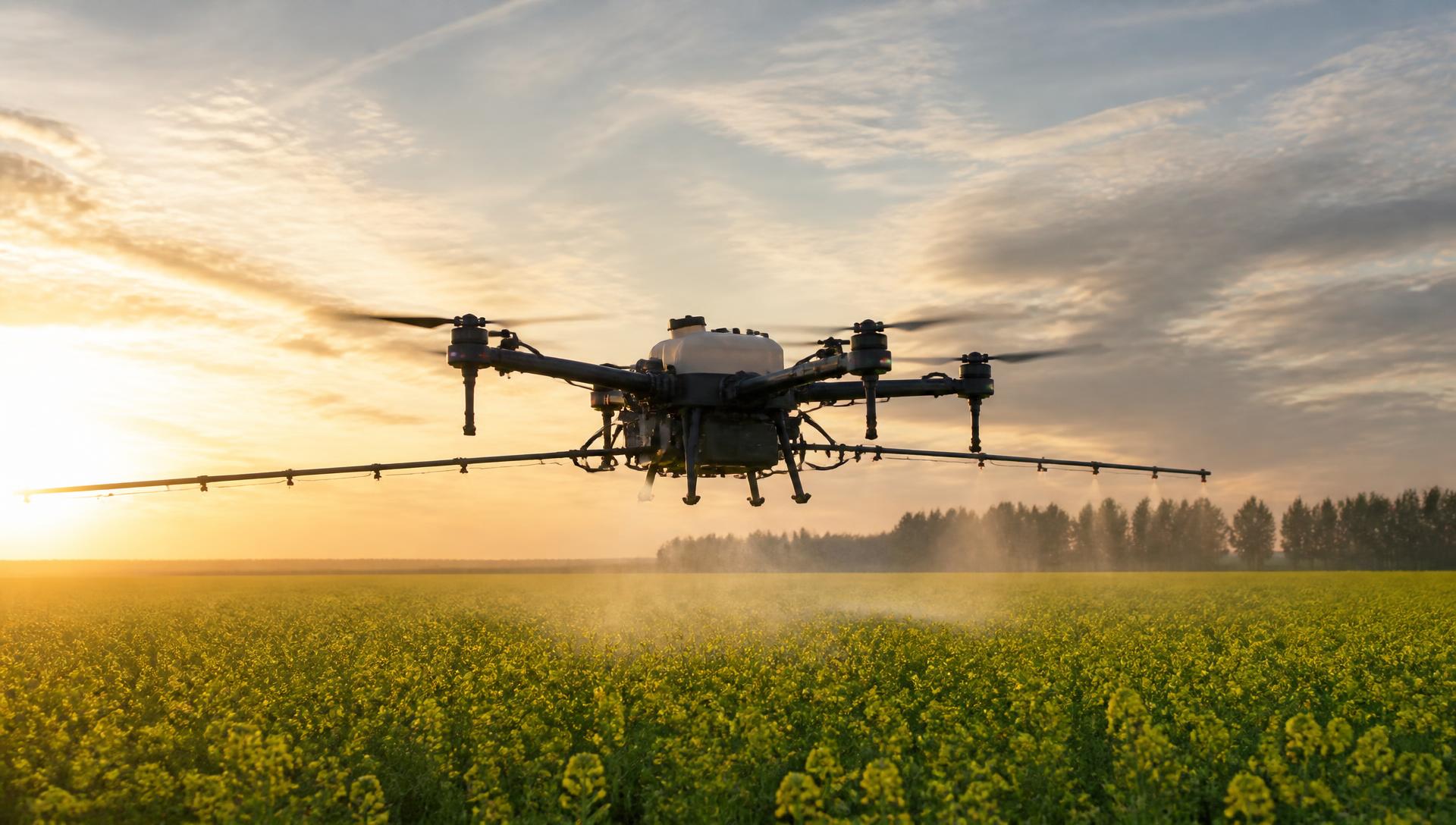
Agricultural Drone Application • Peace Country
Precision aerial application for farms, fields, pastures and hard-to-access ground across northwest Alberta and northeast British Columbia.
Our Services
Precision liquid application for suitable agricultural and land-management applications.
Aerial spreading of suitable fertilizer, granular products and other approved materials.
Broadcast seeding for cover crops, pasture, reclamation and difficult-access areas.
Drone application options for pastures, grazing land and areas difficult to efficiently reach with conventional equipment.
Aerial seeding and application options for industrial sites, disturbed ground and reclamation projects.
Target smaller areas without unnecessarily running equipment across the entire field.
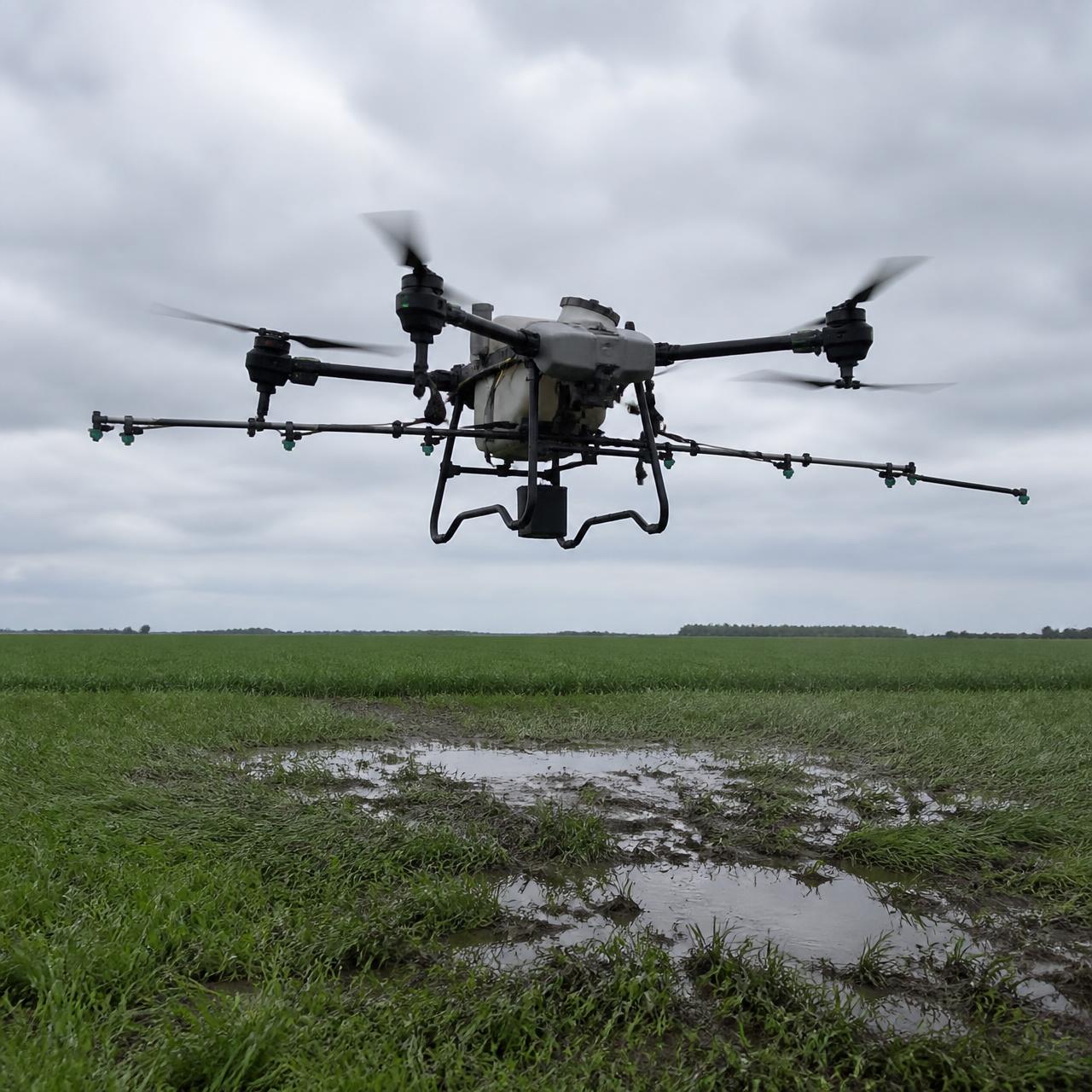
Why Drone Application?
Most operators in this region already have a sprayer. Drone application isn't there to replace it — it's there for the acres and the timing where rolling a machine across the field is the wrong call.
Application availability depends on the product, label requirements, site conditions and applicable regulations.
Built For This Region
Farming here happens over long distances. A single operation can run quarters spread from Beaverlodge and Hythe out past Sexsmith, Wembley and Clairmont, with more land north through Spirit River, Rycroft and Fairview. Cross the river and the pattern repeats around Peace River and up into the North Peace.
On the B.C. side, grain and oilseed acres around Dawson Creek, Pouce Coupe, Taylor and Fort St. John sit next to ranch land, hay ground and river-break pasture, plus a steady amount of industrial and reclamation work. Conditions change fast in this country — a quarter that was firm in June can be soft after one week of rain, and travel time between fields is often the real cost of getting an application done.
Drone application fits that reality: it can be brought to a specific field, launched from the approach, and flown over ground that a sprayer or spreader shouldn't be on.
View Service Area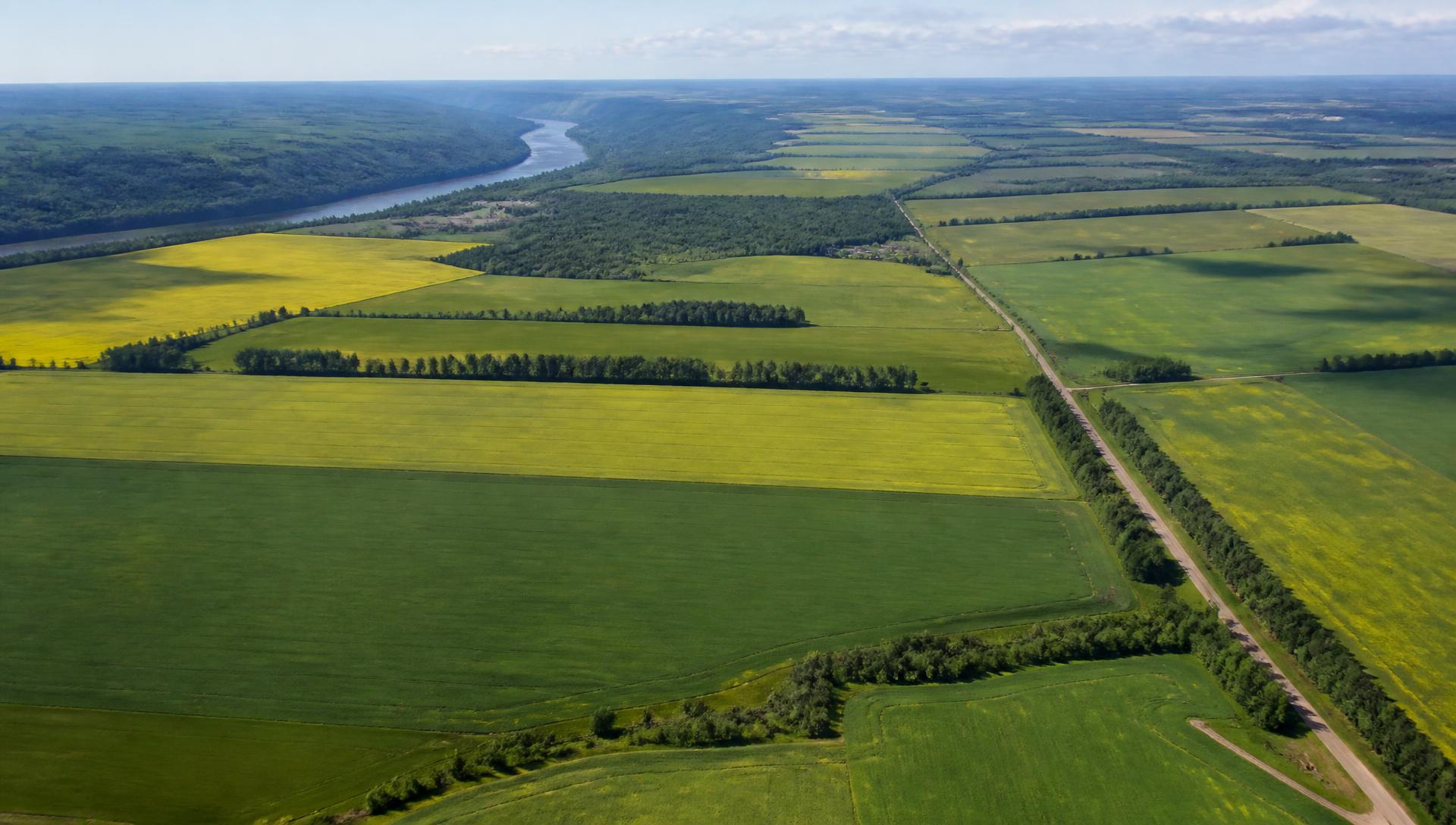
Applications
Aerial application over grain, oilseed and forage acres where ground equipment is not the practical way in.
Grazing land, bush edges and rough quarters that are slow or awkward to cover with a ground sprayer.
Spreading suitable granular products over fields, pasture or specific problem areas.
Broadcast seeding cover crop blends, including into standing crop or stubble late in the season.
Filling in thin stands, drowned-out spots and washed areas without reworking the whole field.
Seed and product application on disturbed ground, well sites, pipeline right-of-ways and steep slopes.
Wet holes, sloughs, ravines, treed corners and land a sprayer or spreader cannot safely reach.
Small acreages and patch work — treat the area that needs it instead of the whole field.
Application availability depends on the product, label requirements, site conditions and applicable regulations.
Tell us what you're applying, where the land is located and approximately how many acres you're dealing with.
How It Works
Location, acreage and application needed.
The job, access, field conditions and application requirements are reviewed.
Determine whether drone application is appropriate for the job.
Application is scheduled based on the job requirements and operating conditions.
Get Started
Tell us what you're applying, where the land is located and approximately how many acres you're dealing with.
Common Questions
Pricing depends on acreage, application rate, the material or product being applied, location and travel, field conditions and the overall requirements of the job. Small patch work and large contiguous acres are not priced the same way, and a wet, broken quarter takes a different amount of flying than a clean open field. The fastest way to get a real number is to send the location, approximate acres and what you need applied, and request a quote.
Coverage depends on the drone, the application rate, tank or hopper capacity, turnaround time between refills, field layout and weather. Rather than quoting a fixed number of acres per hour, we look at the specific job — acreage, rate, access and conditions — and discuss what is realistic for that field.
Suitable granular products can be spread by drone, including on fields, pasture and specific problem areas. Product type, granule size, rate and site conditions all affect whether aerial spreading is the right approach for the job.
Yes — broadcast seeding by drone is used for cover crops, pasture and forage blends, reseeding thin or drowned-out areas, and reclamation seeding. Broadcast seed sits on the surface, so establishment depends on seed type, moisture, timing and seedbed conditions.
Pasture and rangeland are common candidates for drone application because the ground is often rough, wet, treed or fenced in a way that makes ground equipment slow. Whether a specific product can be applied depends on the label and the site.
A drone applies from the air, so soft ground, standing water and rutted approaches do not stop the application the way they stop a sprayer. Wind, precipitation and other operating conditions still determine when it is appropriate to fly.
Tell us where you're located, what you need applied and how many acres you're working with.